
Typos and unclear sentences can distract readers from otherwise useful writing. A repeatable proofreading routine helps freelancers, creators, and small teams catch common mistakes without relying on a checker to make every decision. Grammar describes how words and sentences work together; this overview of grammar is a useful starting point if you want more background.
A practical proofreading workflow
1. Finish the content edit first
Check the purpose, order, and completeness of the piece before correcting individual sentences. Rewriting a paragraph after polishing it creates avoidable work. Once the structure is settled, read the text from the beginning with a specific checklist rather than trying to catch every kind of issue at once.
For client work, confirm the requested spelling style, tone, names, and formatting. If you are new to managing client expectations and confidential material, see our guide to the dos and don'ts of freelancing.
2. Verify names, numbers, and links
Spellcheckers do not know whether a client, product, place, or technical term is spelled correctly in context. Compare proper names, dates, prices, statistics, quotations, and citations with the source material. Click each important link and check that it leads to the intended page.
3. Check one class of mistakes at a time
Separate passes make it easier to focus. For example, look first for misspelled words and repeated words, then check sentence grammar, and finish with punctuation and formatting.
Pay special attention to words that sound alike:
- Your / you're: your shows possession; you're means you are.
- Their / there / they're: their shows possession; there refers to a place or introduces an expression such as there is; they're means they are.
- Its / it's: its shows possession; it's means it is or it has.
- Than / then: use than for a comparison and then for time or sequence.
- I / me: check whether the pronoun is doing the action or receiving it. Remove a joined name temporarily if that helps you hear which form fits.
Also check subject-and-verb agreement, verb tense consistency, capitalization of proper names, and sentence boundaries. A plural ending is not always predictable from a single rule: check unfamiliar or irregular forms in a reliable dictionary rather than guessing.
4. Read slowly, and listen for awkward sentences
Read each sentence aloud or use a read-aloud feature. This can make missing words, repeated phrases, and sentences that are difficult to follow more noticeable. If a sentence is hard to say clearly, rewrite it rather than adding punctuation to an already confusing structure.
For punctuation, check that each sentence expresses a complete thought. A semicolon can join closely related independent clauses; it should not be used as a decorative substitute for a comma or period.
5. Use an editor as a second reader
Built-in writing tools can flag possible spelling and grammar issues, but review each suggestion before accepting it. Microsoft Word's Editor offers spelling, grammar, and other writing suggestions that you can review or ignore.
Treat suggestions as prompts, not facts. A tool cannot confirm that a statistic is current, that a name is correct, or that a suggested rewrite preserves your intended meaning and voice. For unpublished or client writing, check your organization's rules and the tool's privacy terms before submitting text to an online service.
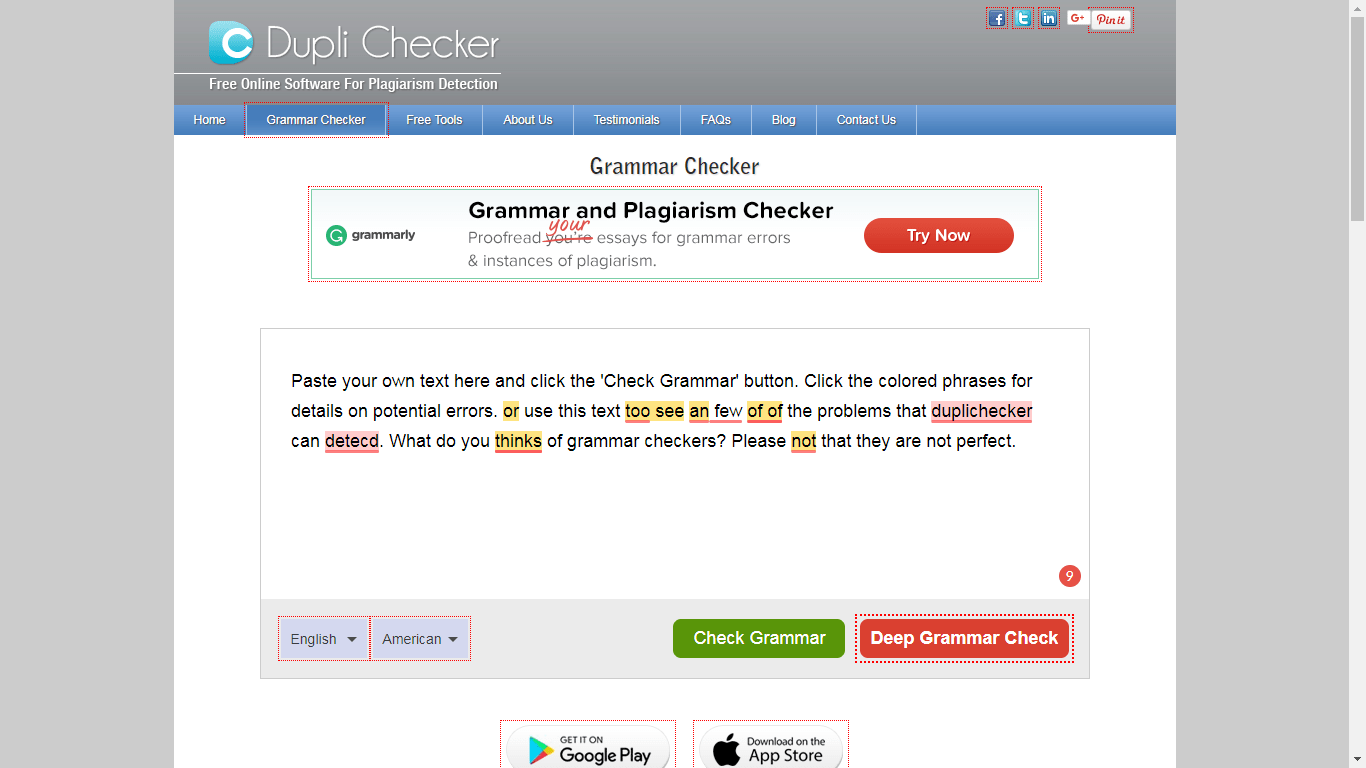
The original post included the following checker screenshot. It is retained for continuity and is not a current tool recommendation:
6. Check the final version
After applying edits, review the document in the format your reader or client will receive. Check headings, lists, links, footnotes, and any text changed during layout or export. For a short page, a final read from the bottom upward can help you focus on individual sentences; always finish with one normal read to confirm the flow.
A short final checklist
- Are names, dates, amounts, and claims checked against reliable sources?
- Are commonly confused words and irregular spellings correct?
- Do sentences have clear subjects, verbs, and punctuation?
- Have you reviewed rather than blindly accepted automated suggestions?
- Do links work, and does the delivered layout preserve the intended meaning?
Proofreading will not make every piece perfect, but a focused human review followed by a careful tool-assisted pass can catch many avoidable errors before publication.
